Running a cake shop is not just about baking great cakes.
Every day, you have orders to check, ingredients to arrange, staff to coordinate, customers to handle, payments to track and deliveries to manage.
And when the shop gets busy, it is very easy for one small task to get missed.
A cake is ready but the delivery is not arranged.
An ingredient runs out in the middle of production.
A customer calls asking about an order and nobody knows the exact status.
A payment was received but was not updated.
These may look like small problems, but when they happen repeatedly, they consume your time, increase stress and can affect your customer experience.
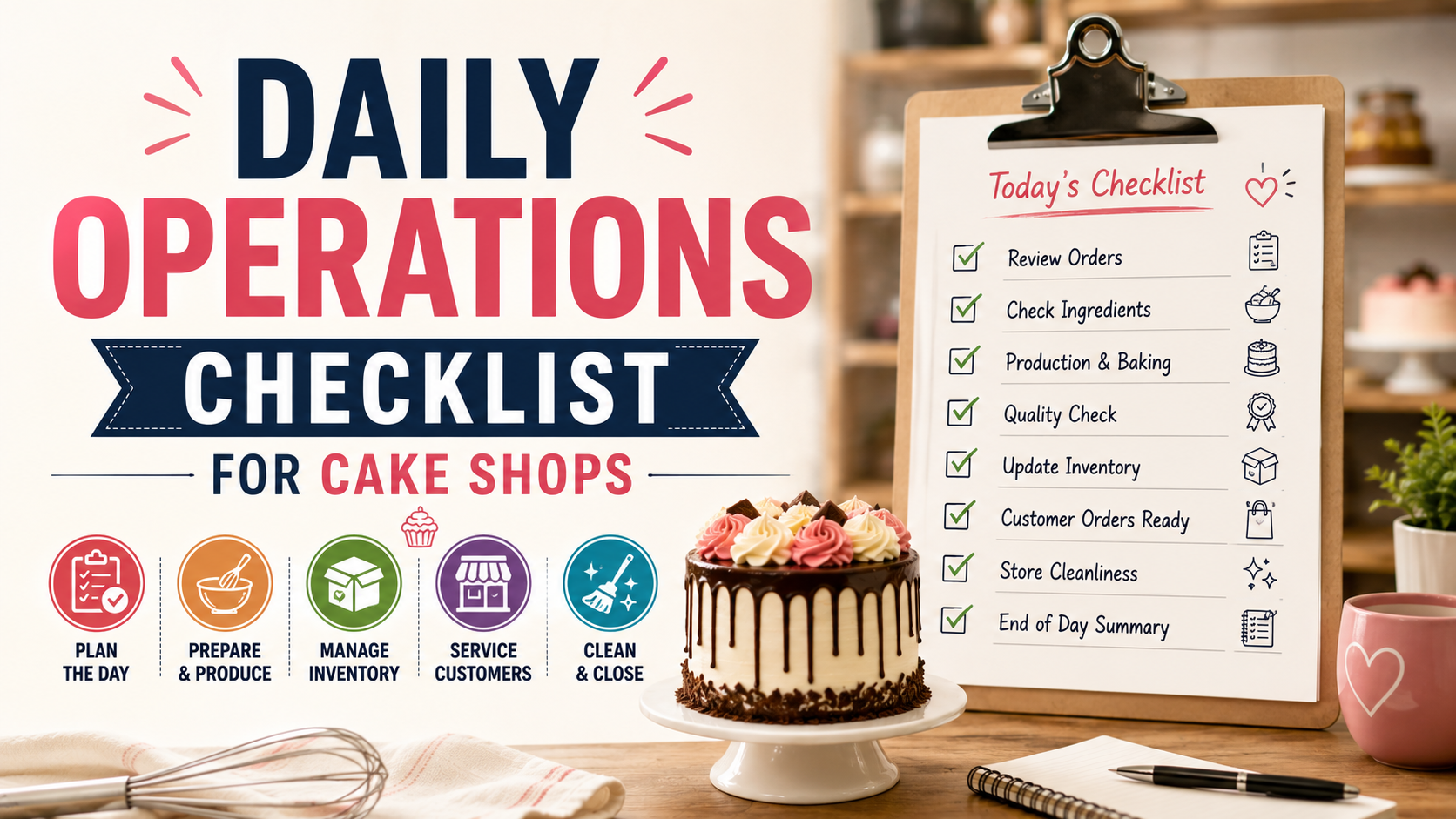
This is why every cake shop should have a simple daily operations checklist.
The goal is not to create more paperwork. The goal is to make sure important tasks happen every day, even when the shop is busy.
Why Does Your Cake Shop Need a Daily Checklist?
Most cake shop owners already have a routine.
The problem is that the routine is often in the owner's head.
When you are at the shop, everything works because you know what needs to happen.
But what happens when you are busy with another outlet, travelling, attending a personal commitment or simply not available?
A proper checklist gives your team a standard process to follow.
It can help you:
- Reduce missed tasks
- Avoid last-minute surprises
- Keep staff organised
- Improve order accuracy
- Control inventory better
- Track payments
- Improve customer service
- Prepare the shop for the next day
The best part is that the checklist does not have to be complicated.
It simply needs to cover the important activities that happen every day.
1. Start the Day by Checking the Shop
Before customers start arriving and production gets busy, make sure the shop is ready.
Check the sales counter, kitchen, storage areas and equipment.
Make sure the work areas are clean and the equipment required for the day's production is available and working.
Also check basic supplies such as cake boxes, boards, bags, ribbons, candles and other packaging materials.
You don't want to discover that you are out of cake boxes when five orders are ready for pickup.
2. Review All Orders for the Day
This should be one of the first tasks every morning.
Go through all the orders scheduled for the day and make sure the team knows what needs to be prepared.
For every order, check important details such as:
- Customer name
- Contact number
- Cake flavour
- Weight or quantity
- Design
- Custom message
- Pickup or delivery time
- Delivery address
- Advance payment
- Balance amount
This is particularly important for customised cakes.
A customer may have placed the order several days ago, but the details still need to be clear to the production and delivery teams today.
3. Prioritise Production
Not every cake needs to be ready at the same time.
A cake required at 11 AM should obviously get priority over one scheduled for 7 PM.
Arrange the day's production based on pickup and delivery timings.
The production team should know:
What needs to be made?
How many are required?
Which order is urgent?
When does each order need to be ready?
A simple production plan can prevent the common situation where everything becomes "urgent" at the last minute.
4. Check Ingredients Before Production Starts
One of the worst times to discover that an ingredient is missing is when the cake is already in production.
Before starting the day's work, check the ingredients required for scheduled orders.
Pay particular attention to frequently used items such as cream, chocolate, butter, fruits, fillings and other key ingredients.
Also check packaging materials.
If stock is low, arrange replenishment early rather than waiting until the shop runs out.
This small habit can prevent unnecessary interruptions during production.
5. Check Special Cake Instructions
Custom cake orders need extra attention.
A cake may have a specific colour, design, topper, photograph or personalised message.
Make sure these details are clearly available to the person preparing and decorating the cake.
It is frustrating for both the customer and the bakery when a beautiful cake is prepared with the wrong name or message.
A quick final check can prevent this.
6. Keep Order Status Updated
As orders move through the production process, the status should be updated.
For example:
Confirmed → In Production → Ready → Dispatched → Delivered/Picked Up
This gives everyone a clear idea of what is happening.
It also reduces the number of times the owner or manager has to ask:
- "Is this cake ready?"
- "What happened to this order?"
- "Has this customer picked up the cake?"
When the information is updated properly, your team can work with much less confusion.
7. Track Advance and Pending Payments
Payment tracking should be part of your daily routine.
Many cake shops take an advance when the order is placed and collect the balance at pickup or delivery.
If payment information is maintained separately from the order, it becomes easy to miss.
Every day, review orders where:
- Advance payment is pending
- Balance payment is due
- Payment has been received but not updated
- A refund or cancellation needs attention
A cake may be ready, but the payment status should be clear before it leaves the shop.
8. Monitor Inventory During the Day
Inventory management should not happen only when something runs out.
Keep an eye on fast-moving ingredients and packaging materials throughout the day.
If you notice that a particular ingredient is being consumed much faster than expected, investigate why.
It could be because of increased orders, production wastage, incorrect portioning or an inventory recording issue.
The more accurately you track inventory, the easier it becomes to plan purchases and control wastage.
9. Don't Let Customer Enquiries Get Lost
Cake shops receive enquiries from multiple channels.
Customers may call, WhatsApp, visit the shop or message through social media.
When the shop gets busy, some enquiries can easily be forgotten.
Make it a daily habit to check unanswered calls and messages.
Also keep track of customers who asked for prices, designs or availability but have not yet confirmed their order.
Not every enquiry will become a sale, but every genuine enquiry deserves a response.
10. Check Every Cake Before Handover
Before a cake is handed over to the customer or given to the delivery person, conduct a final check.
Verify:
- Correct customer
- Correct cake
- Correct flavour and size
- Cake message
- Design
- Packaging
- Cake board
- Toppers or accessories
- Pickup or delivery details
This should take only a few minutes.
But those few minutes can save you from a much bigger customer complaint later.
11. Prepare Deliveries Properly
If your cake shop provides delivery, delivery planning should be part of the daily operations checklist.
Make sure the delivery person has the correct:
- Customer name
- Phone number
- Address
- Delivery time
- Order details
- Payment information, if required
If you have multiple deliveries, plan them sensibly based on timing and location.
A cake that reaches the customer late can damage the experience even if the cake itself is perfect.
12. Keep the Shop and Kitchen Clean
Cleaning should not be treated as something that happens only at closing time.
Work areas should be kept clean throughout the day.
Make sure:
- Work surfaces are cleaned regularly
- Equipment is cleaned properly
- Waste is removed
- Storage areas remain organised
- Ingredients are stored correctly
- Packaging areas are kept clean
A clean and organised bakery is not only better for hygiene. It also makes it easier for employees to find what they need and work efficiently.
13. Review the Day Before Closing
Before the team finishes for the day, take a few minutes to review what happened.
Check:
- Orders completed
- Orders still pending
- Deliveries completed
- Payments received
- Pending balances
- Customer complaints
- Inventory issues
- Significant wastage
If something needs attention tomorrow, record it.
Do not depend only on someone saying, "I'll remember."
14. Prepare for Tomorrow
One of the most useful habits for a bakery is preparing for the next day before today's shift ends.
Check tomorrow's orders.
Review ingredients required.
Identify special cake orders.
Check packaging requirements.
Plan production priorities.
If something needs to be purchased, arrange it in advance.
The objective is simple:
Tomorrow's team should not have to start the day by discovering yesterday's problems.
What Should You Check Every Week?
Not everything needs to be reviewed every day.
Once a week, take some time to look at the bigger picture.
Review:
- Best-selling products
- Slow-moving products
- Inventory usage
- Wastage
- Sales performance
- Pending payments
- Customer complaints
- Staff performance
- Upcoming large orders
- Equipment issues
This helps you identify patterns that may not be obvious during daily operations.
For example, if the same ingredient is repeatedly wasted, you may need to change your purchasing or production process.
Can Bakery Software Make This Easier?
A checklist is a great starting point.
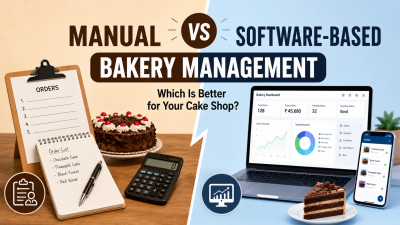
But as your cake shop grows, maintaining everything manually through notebooks, Excel sheets and WhatsApp messages can become difficult.
This is where bakery management software can help.
Instead of keeping important information in different places, your team can manage key activities through a central system.
Orders, billing, inventory and customer information can be organised digitally, making it easier for staff to access the information they need and for owners to keep track of the business.
The purpose of software is not to make your bakery more complicated.
It is to make your daily operations more organised.
A Simple Daily Routine for Your Cake Shop
If you want to start today, keep your checklist simple.
Morning
- Check shop and kitchen
- Review today's orders
- Check production requirements
- Check ingredients and packaging
- Prioritise urgent orders
During the Day
- Update order status
- Monitor production
- Track payments
- Monitor inventory
- Respond to customer enquiries
- Prepare pickups and deliveries
- Check cakes before handover
Before Closing
- Review completed and pending orders
- Check payments
- Record important wastage
- Review customer issues
- Check tomorrow's orders
- Prepare purchase requirements
- Clean and organise the shop
You can print this checklist and keep it near the manager's desk, production area or billing counter.
Final Thoughts
A successful cake shop is not built only on delicious cakes.
It is built on hundreds of small tasks being completed correctly every day.
When there is no standard process, the owner becomes responsible for remembering everything.
That may work when the business is small.
But as orders, employees and outlets increase, it becomes difficult to manage everything personally.
A daily operations checklist gives your team a simple system to follow.
And when that checklist is supported by the right bakery management software, you can reduce manual work, improve visibility and spend less time solving avoidable problems.
Good bakery operations are not about doing more work. They are about making sure the right work gets done at the right time.
Ready to Make Your Cake Shop Operations More Organised?
CakePro helps cake shops and bakeries manage their daily operations from one platform, including orders, billing, inventory and customer management.
If you are still managing your bakery through notebooks, spreadsheets and scattered WhatsApp messages, it may be time to simplify your daily operations.
Book a Free Demo of CakePro and see how it can fit into your cake shop.